
How is The Studio different from a traditional art class?
Students make artistic choices. Rather than teacher driven artwork, students develop their own ideas and create artwork that is personally meaningful.
Artwork is unique. Student work may look very different from one another because each artist follows their own interests, questions, and creative process.
Short demonstrations, long studio time. Each 1-hour class begins with a brief 5-minute demonstration introducing a new technique, material, artist, concept, or process. The remaining time is dedicated to creating, experimenting, and reflecting.
Choice-based learning. Students decide how to use the day's demonstration in their work—or they may continue developing an ongoing project or explore a different idea. They are always free to collaborate on projects with other artists.
Media centers encourage exploration. The Studio is organized into centers where students can choose and access materials they want to work with on their own.
The focus is on creative thinking and process. Students learn to plan, problem-solve, revise, persevere, and reflect—the same habits used by working artists.
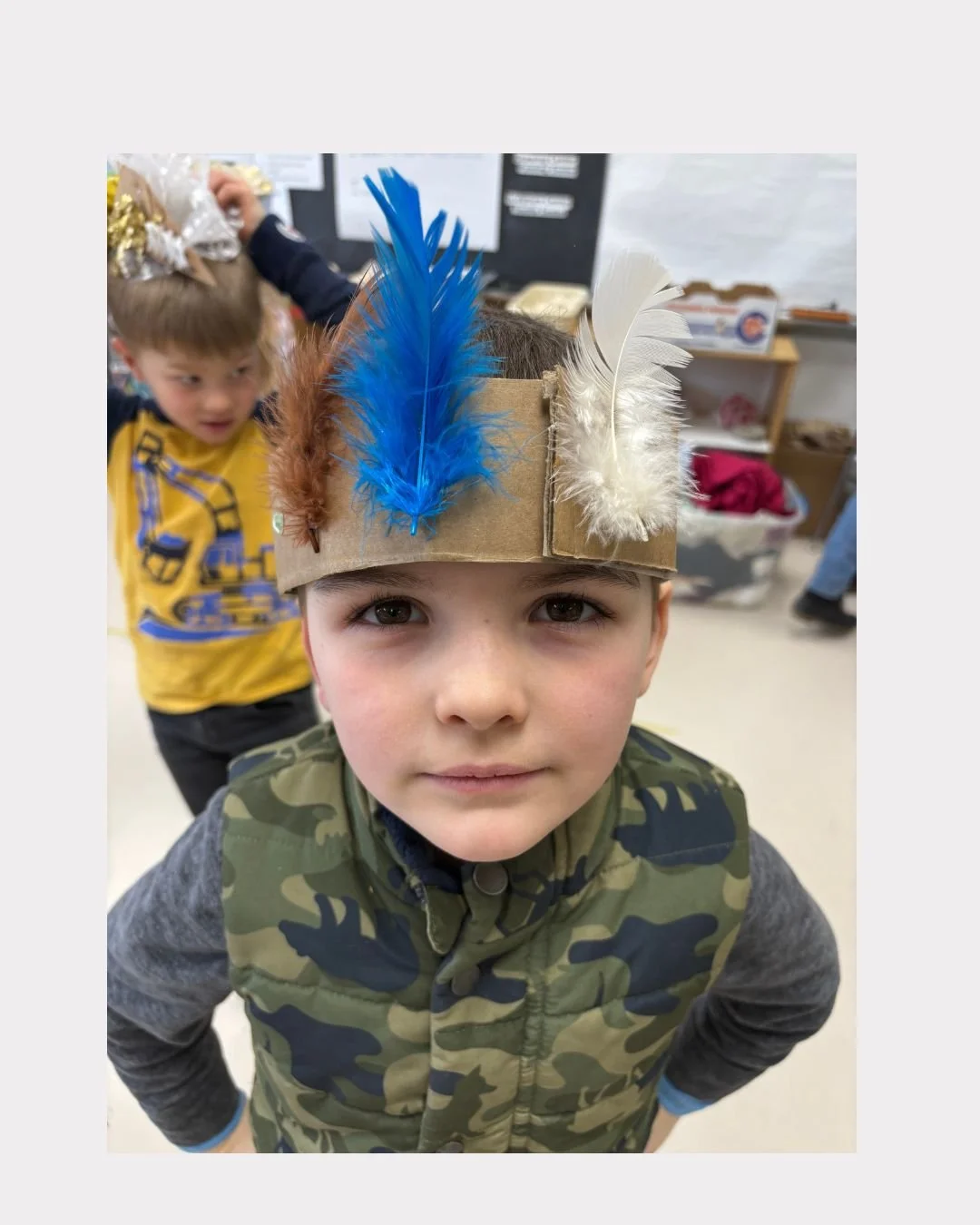
Student created a hat
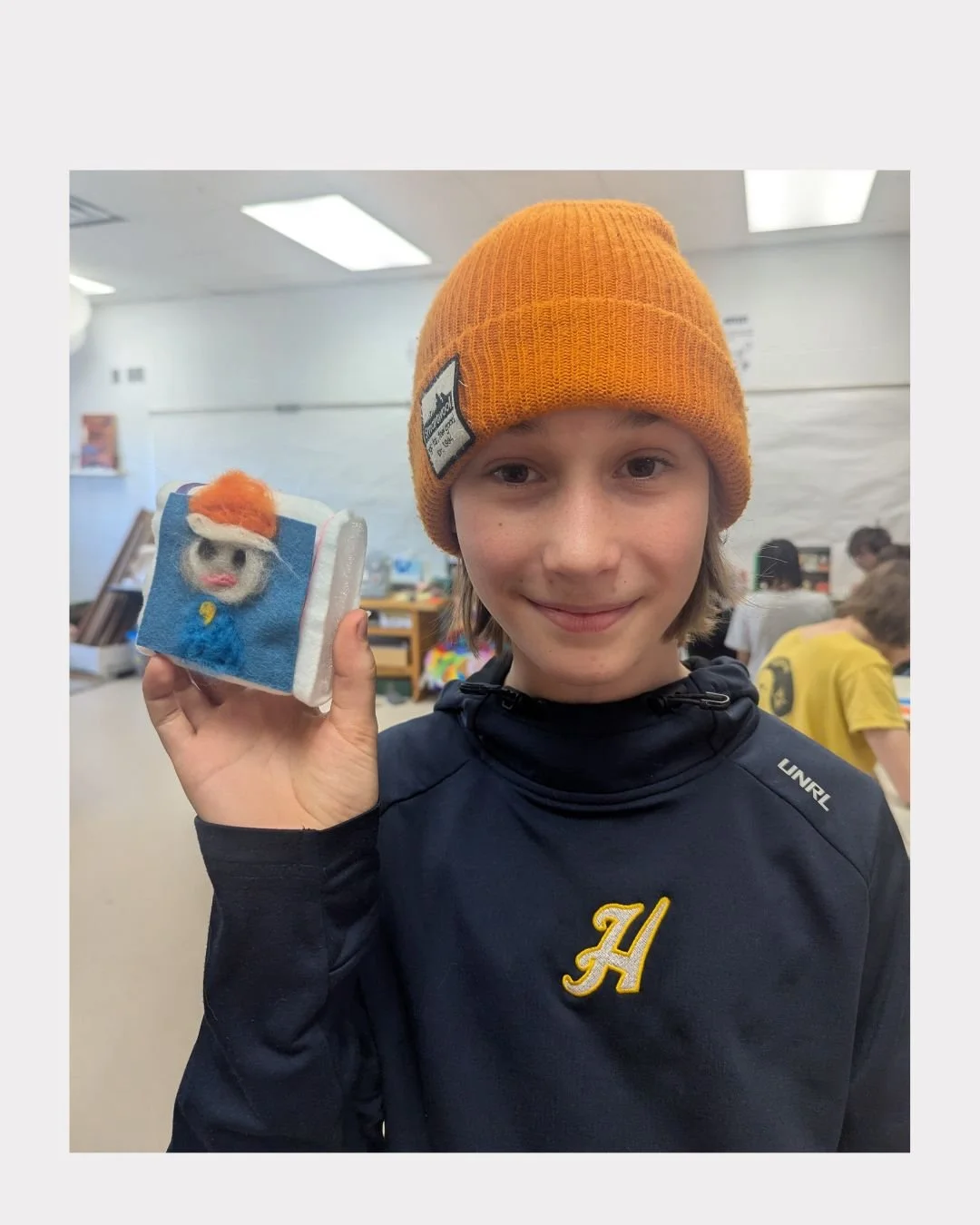
needle felting self-portrait
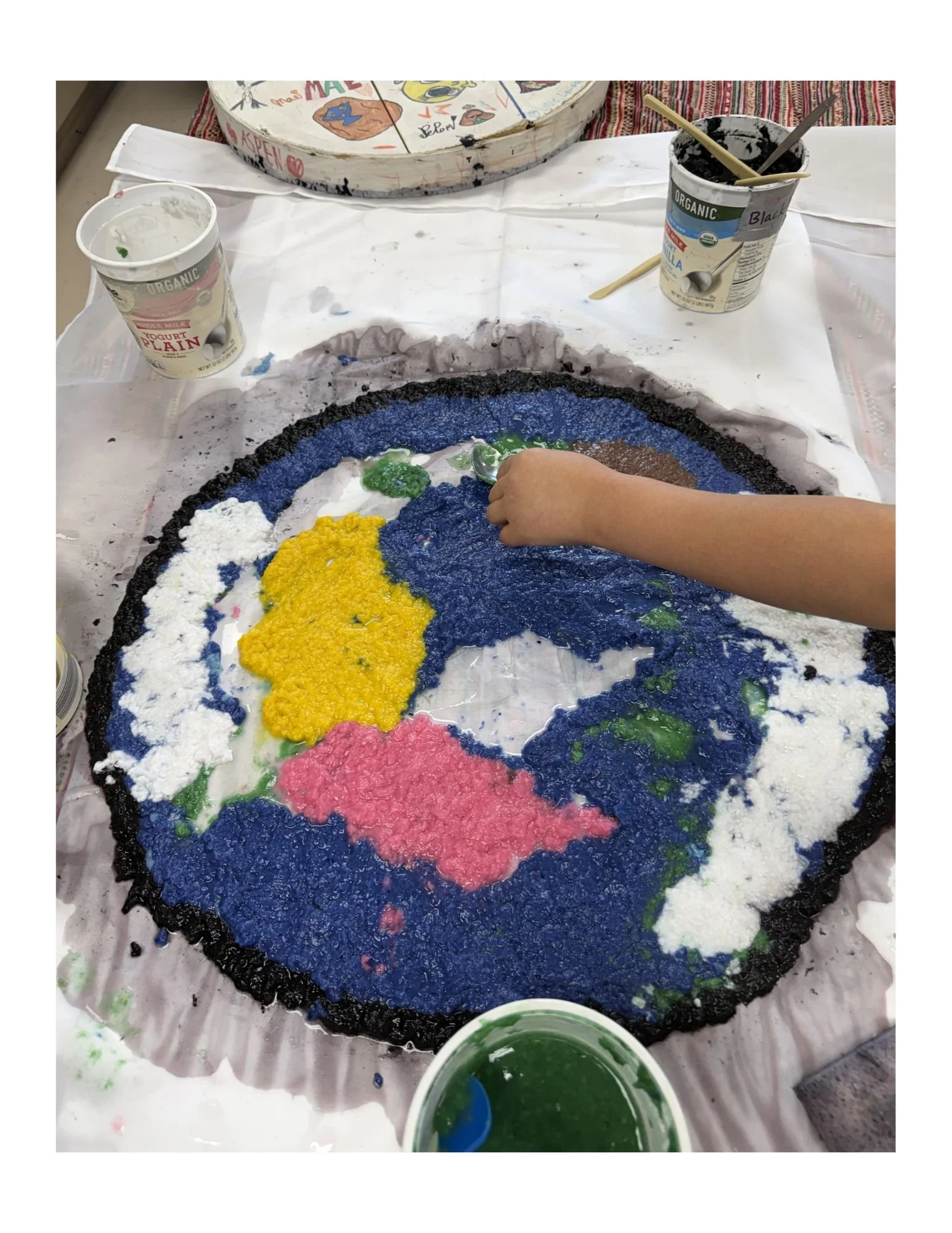
paper making with paper pulp
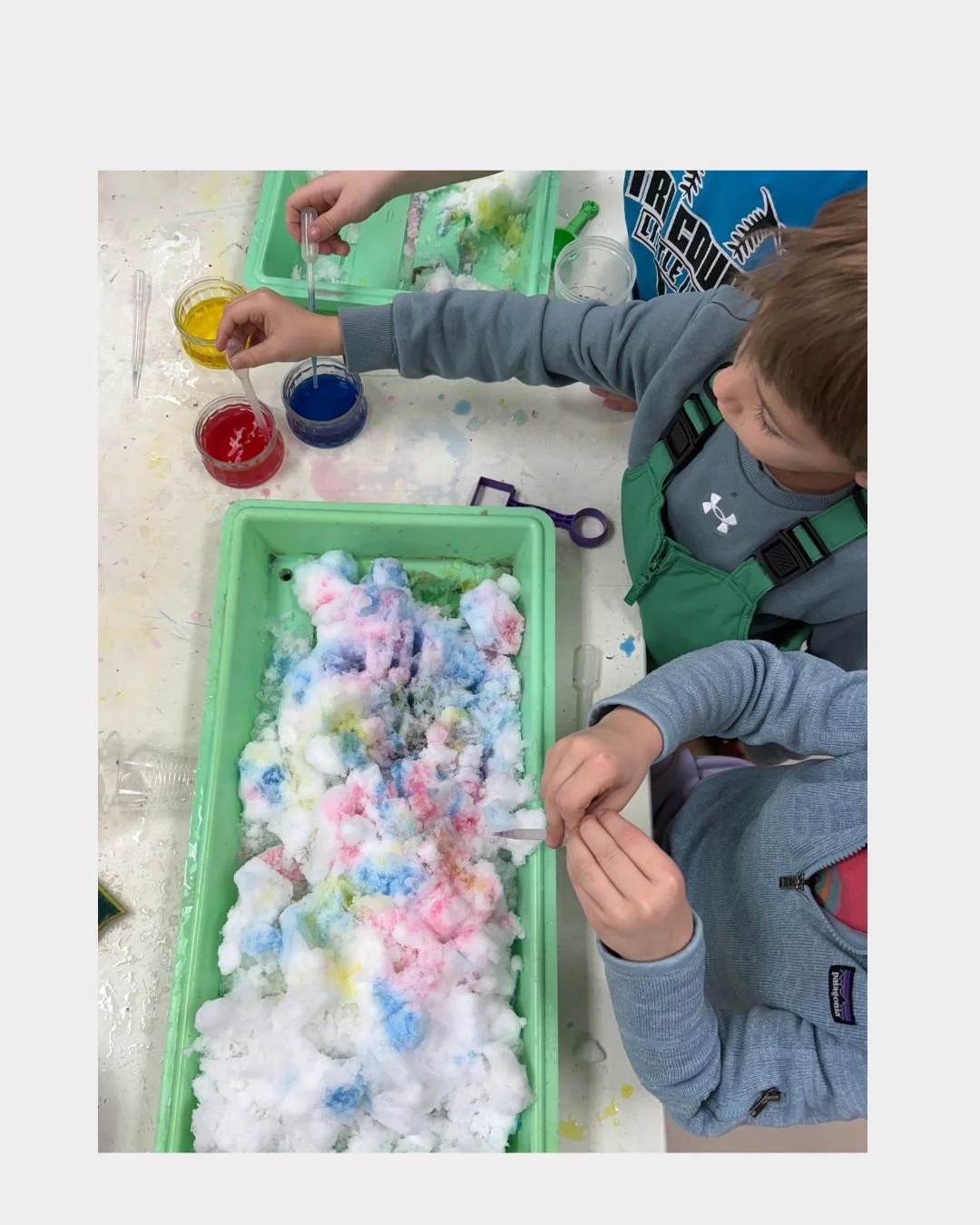
experimenting with snow and water color
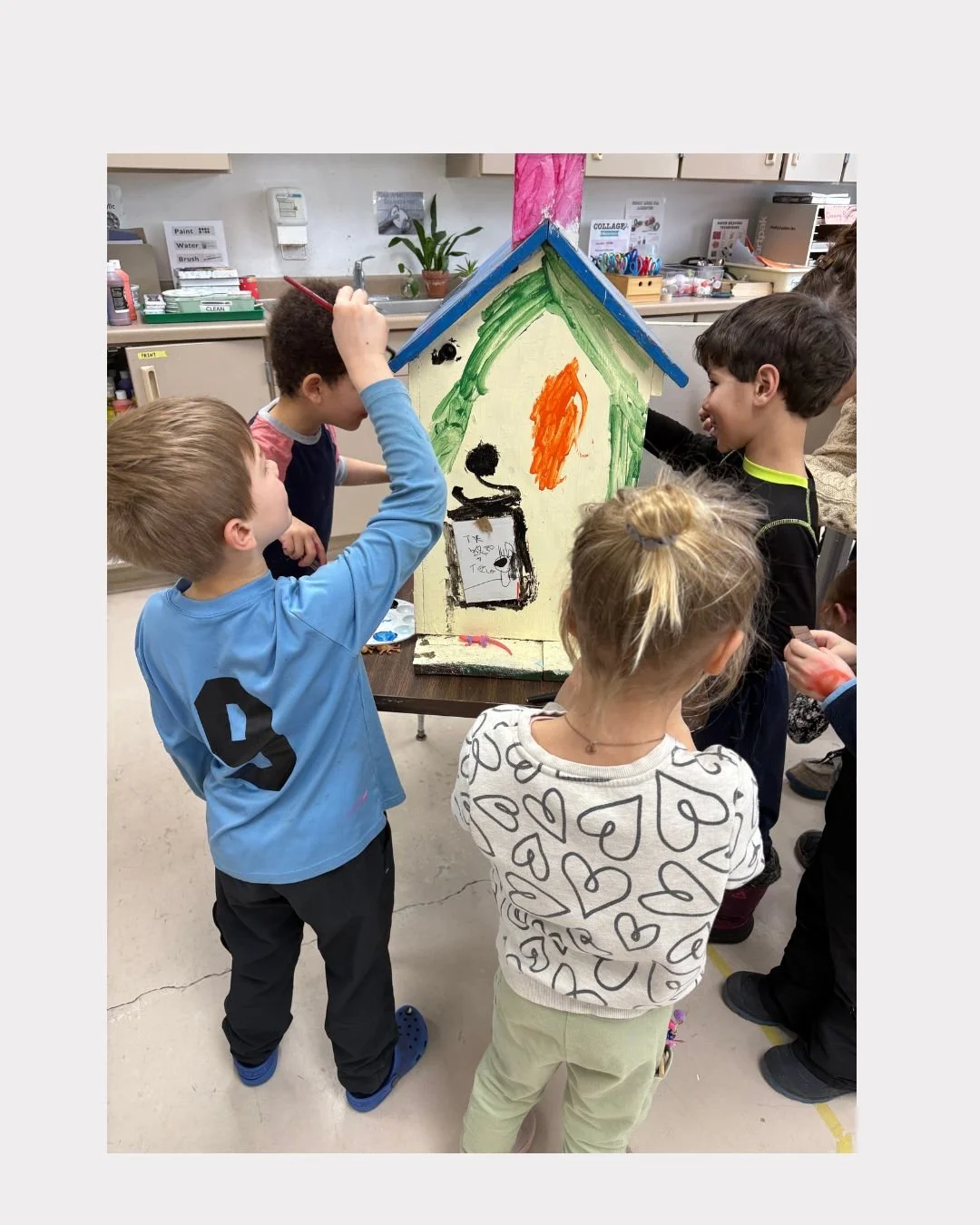
collaborative house painting
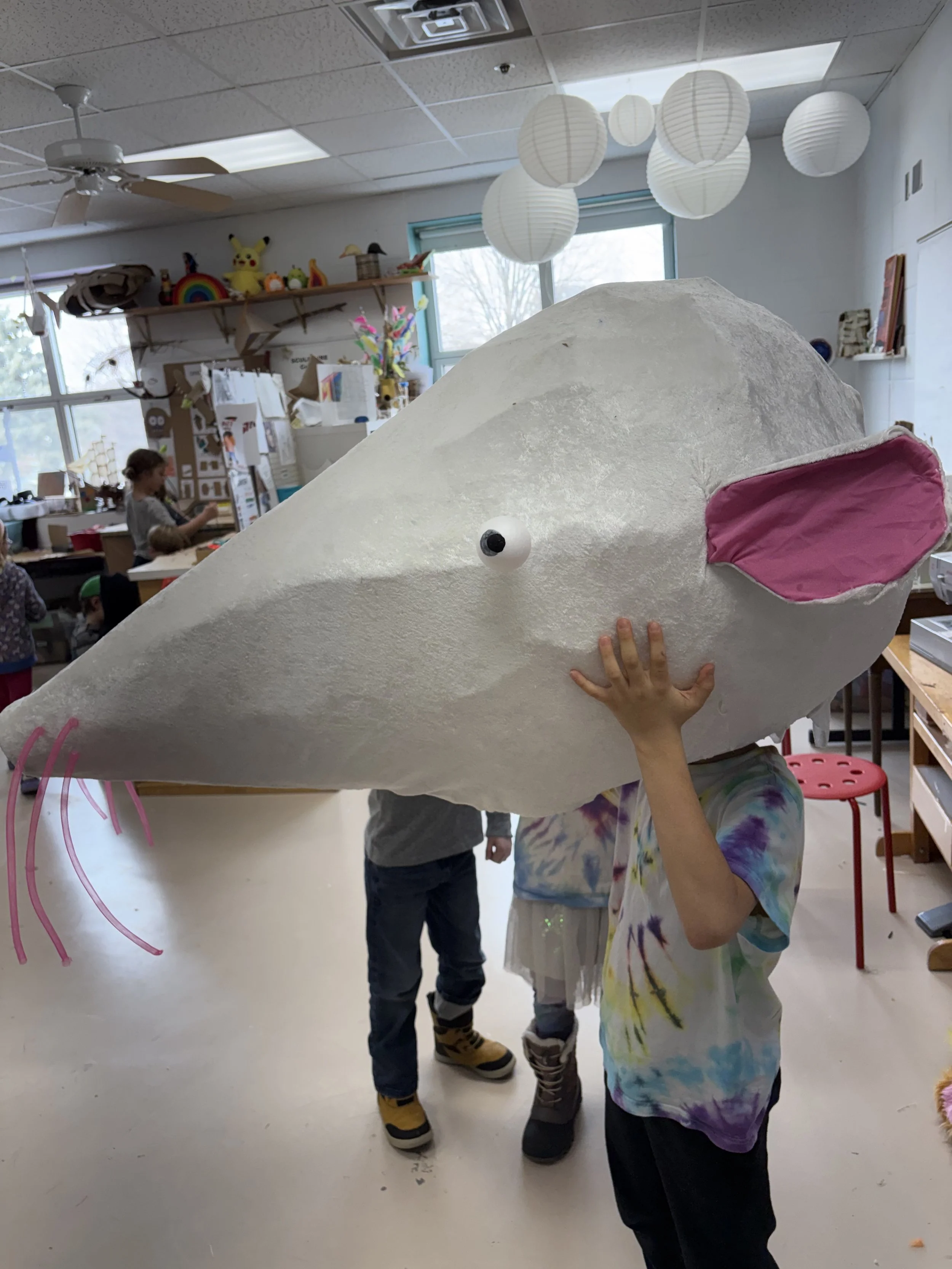
collaborative paper mache heads
The Northern Lights Studio
The Studio is a choice-based art classroom built around the belief that children learn best when they have meaningful opportunities to make decisions as artists. Instead of every student completing the same teacher-directed project, students develop their own ideas and create artwork that reflects their interests, experiences, and imagination. The goal is for students to gain creative confidence and experience bringing their ideas to life.
Each 1-hour class begins with a focused 5-minute demonstration. During this mini-lesson, students are introduced to a new technique, material, process, artist, or artistic concept. Many demonstrations are planned using classroom connections, student interests, and observations of artistic growth. After the demonstration, students might apply a new technique, while others may continue developing an existing project or explore a different idea. Just as adult artists do, students make thoughtful decisions about their own creative process.
The Studio is organized into media centers that encourage exploration and independence. Permanent centers include drawing, painting, collage, cardboard sculpture (lots of hot glue!), and architecture (Legos, blocks and building materials). Rotating centers may feature textiles (including our two sewing machines), architecture, clay (we have a kiln and every grade is offered a unit working with clay), printmaking, paper-making, and other media throughout the year. Students also practice caring for their tools, organizing their workspace, and cleaning up independently. These routines help build responsibility, confidence, and respect for a shared creative environment.